
Walk into any tech shop in Kigali and someone will sell you on fibre. Walk into any café on a hill and someone will sell you on Starlink. Both are half right – and the honest answer to “which internet should I get in Rwanda?” depends on where you are and what you need it to do.
Here’s a no-sales-pressure comparison of the three main options: Starlink, MTN and Liquid Telecom – speeds, coverage, cost, and who each one is actually built for.
The quick comparison
| Starlink | MTN | Liquid Telecom | |
|---|---|---|---|
| What it is | Satellite internet (licensed, local resellers) | Fibre + mobile (4G/5G) | Fibre + mobile |
| Typical home speeds | 150-350 Mbps | Up to 50-100 Mbps on fibre plans | Up to 50-100+ Mbps on fibre plans |
| Latency | 25-50 ms | ~5-30 ms on fibre | ~5-30 ms on fibre |
| Where it works | Anywhere with a clear view of the sky | Where fibre is laid + mobile coverage | Where fibre is laid + mobile coverage |
| Upfront cost | 450,000-600,000 RWF (all-in with install) | Modem/installation fees vary by plan | Modem/installation fees vary by plan |
| Monthly cost | 40,000 / 60,000 / 150,000 RWF by plan (billed directly by Starlink) | From entry-level fibre plans up (check mtn.com/rw) | From entry-level fibre plans up (check liquid.rw) |
| Best for | Speed, reliability, areas without fibre | Value fibre where available | Value fibre where available |
Competitor plans and prices change – always check the official MTN and Liquid sites for current figures before comparing line by line. The Starlink figures above are what StarlinkRW installs and measures in Kigali today.
Starlink: the strengths
Speed that beats most home fibre. 150-350 Mbps with 25-50 ms latency is what customers in Kigali actually measure – faster than the entry and mid tiers of terrestrial fibre, and above even the top ones.
It works where fibre doesn’t. This is the big one. Fibre exists where the cable was dug. Starlink exists where the sky is visible. The hills above Kigali, the lakeside properties, the farm in Huye, the lodge in Musanze – these are Starlink’s natural territory.
It holds up when the ground network doesn’t. Fibre gets cut. Towers get congested at 7 PM. A storm knocks out a district. Starlink is a completely separate physical network – nothing underground can touch it. For businesses, that’s not a luxury, it’s uptime.
Starlink: the honest weaknesses
The top plan costs more than entry-level fibre. Starlink plans run at 40,000, 60,000 and 150,000 RWF per month – so the 150,000 RWF tier is a premium for maximum speed, while the 40,000 and 60,000 RWF plans are competitive with mid-tier fibre. If your only goal is the cheapest possible Wi-Fi, and fibre is already in your building and actually good on your street, fibre remains the budget choice. But on speed, coverage and reliability, Starlink is the better internet in Rwanda – that’s our honest view, and it’s what our customers keep telling us.
You need a view of the sky. A deep-valley location or a building completely boxed in by taller neighbours may not be a clean Starlink site. We check this for you before you commit – that check is free.
MTN: strengths and where it falls short
MTN is Rwanda’s telco giant, and where its fibre reaches, it’s a legitimate option – entry plans are priced to be affordable, the app and ecosystem are polished, and in well-served Kigali neighbourhoods the speeds are fine for streaming and work. Its limits are the same as every fibre network: it only works where the cable has been laid, performance varies street by street, and the mobile side gets congested in dense areas during peak hours. If you’re on a hill, in a new estate, or upcountry, “MTN fibre” may simply not be on the menu for your address.
Liquid Telecom: strengths and where it falls short
Liquid has been one of the more aggressive fibre operators in Kigali, with competitive plans and solid speeds where the infrastructure exists. The same fundamental constraint applies: coverage follows the cable map. Where Liquid’s fibre is in your building, it’s a strong value option. Where it isn’t, there’s no product to buy.

Which one should you actually pick?
Our straight answer first: Starlink is the best internet in Rwanda right now. It’s the fastest, it’s the most reliable, and it’s the only option that works from the city centre to the most remote hill in the country. Fibre and mobile are fine – in specific situations. But overall? Starlink wins. Here’s how we’d break it down by situation:
You’re in a Kigali apartment and fibre is available and good there: entry-level fibre (MTN or Liquid) is a fine budget option. Test it for a month or two – and if it’s flaky at 7 PM, you’ll know what to do. If you want the best speed and reliability your money can buy in Rwanda, we’d still go Starlink.
You’re on a hill, in a new estate, upcountry, or in a building without fibre: Starlink. There is no serious alternative at those speeds, and it’s the only option that doesn’t depend on a cable reaching your door.
You run a business that can’t afford downtime: Starlink as primary, or fibre as primary with Starlink as the automatic backup. This dual-line setup is what a lot of Kigali offices and guesthouses run – one line always works, and no client ever hears “we’re on the other line.”
You want speed for video work, gaming or remote work with international calls: Starlink’s 25-50 ms latency and 150-350 Mbps typically beat what fibre delivers at your price point.
Can you use more than one?
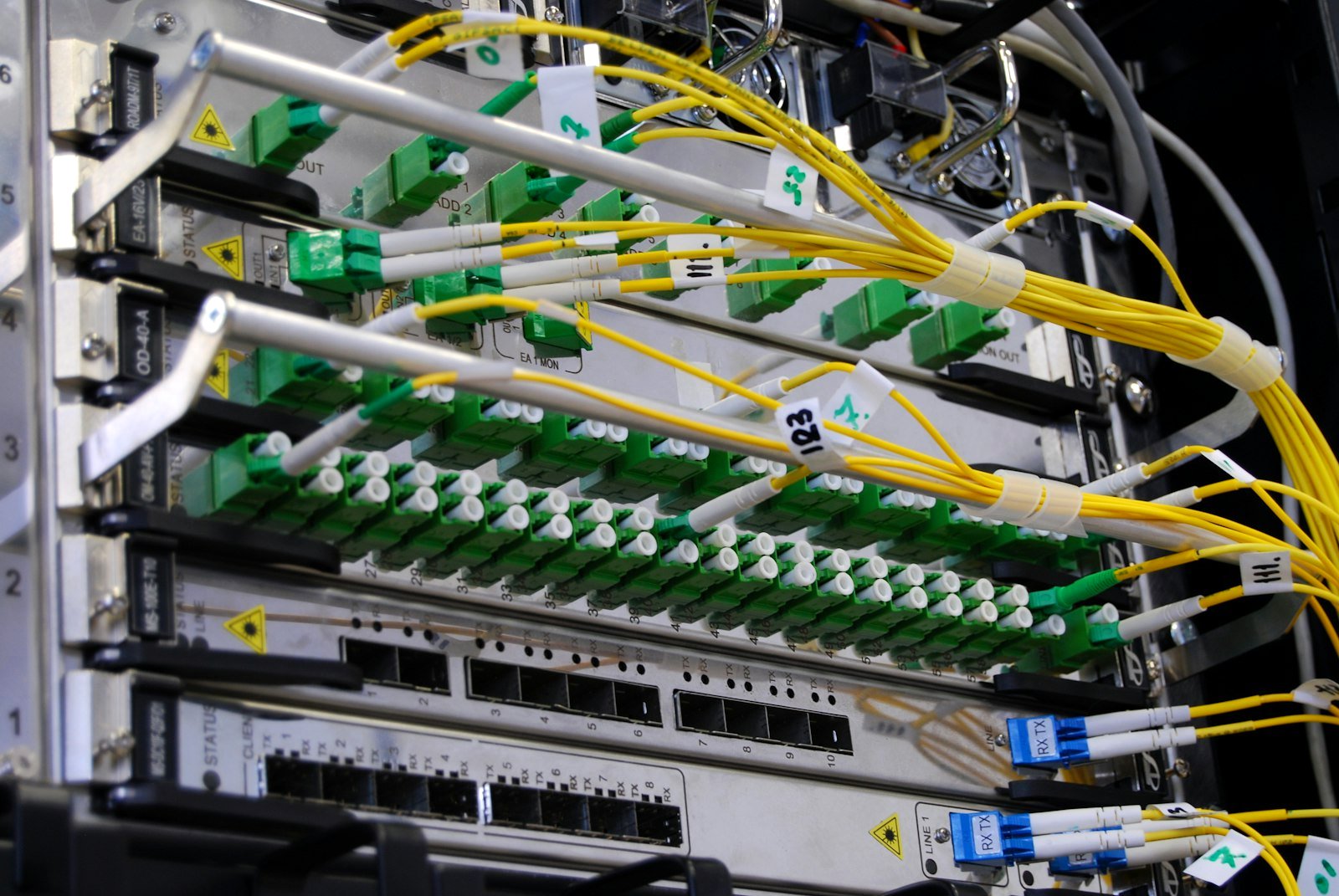
Yes – and it’s the setup we recommend most for businesses. Fibre for the cheap bulk of everyday traffic, Starlink for speed and as the failover when the cable gets cut. Your Starlink stays in your name and can be managed directly, while we set up the routing so the switch happens without you noticing.
Starlink vs MTN vs Liquid – FAQ
Is Starlink really faster than MTN fibre?
In speed, yes – 150-350 Mbps versus the 50-100 Mbps of typical fibre plans. In latency, fibre has a slight edge. In coverage, Starlink wins by a country’s width. In monthly price, entry fibre can still cost less than Starlink’s top plan – but the 40,000 and 60,000 RWF Starlink plans sit in the same money as mid-tier fibre. On overall value – the speed you actually get, the reliability, where it works – we think Starlink is the better internet in Rwanda.
Which is cheapest in Rwanda?
Starlink’s plans start at 40,000 RWF per month, so it’s no longer automatically the most expensive option – entry-level fibre plans can still cost less, and the 150,000 RWF tier is for people who want maximum speed. Starlink’s all-in kit price (450,000-600,000 RWF with installation) is a one-off – check current fibre prices on the MTN and Liquid sites for the exact comparison.
Does Starlink replace my mobile data?
For home and business internet, yes – most customers never open their hotspot again. Your phone still uses the mobile network when you’re out and about, of course.
If I pick Starlink, who installs it?
StarlinkRW – same day in Kigali, all included in the kit price. See the installation guide for the full process, and the price guide for the full cost picture.
Make the call that fits your address
Tell us where you are and what the internet needs to do, and we’ll tell you honestly whether Starlink is the right choice – or whether your street is better off on fibre.
Call +250 781 495 754, ask us on WhatsApp, or email info@starlinkrw.com. Either way, you’ll get a straight answer in minutes.